
Nepal's New Cabinet After the Gen Z Movement: A Full Political and Institutional Analysis of the Shah Government
By Economics Nepal ·
## Introduction: A Cabinet Born Out of Rupture
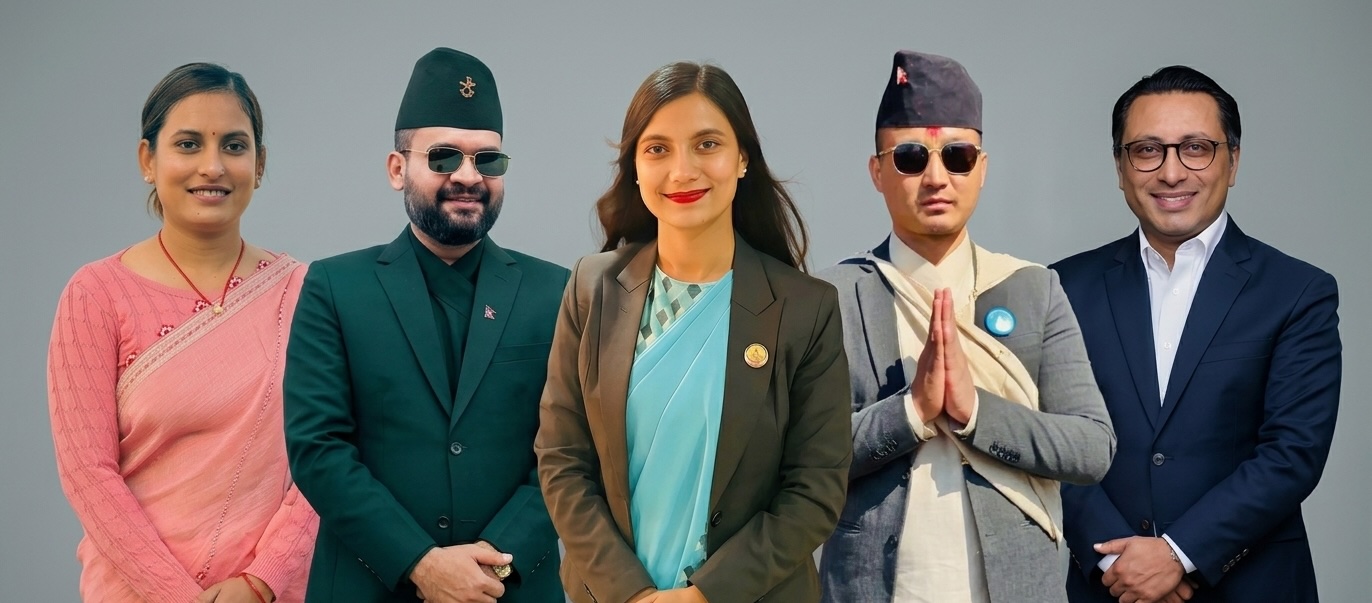
Nepal's new cabinet under Prime Minister **Balendra "Balen" Shah** is not just a routine transfer of power. It is the governing expression of a political break. The "Gen Z movement" that erupted around anger over corruption, censorship, weak service delivery, and political stagnation has now produced what may be the most disruptive executive in Nepal's republican era. Current reporting describes Shah's rise as the direct electoral consequence of a youth-driven revolt against the old political establishment, with his party, the **Rastriya Swatantra Party (RSP)**, riding that anti-system mood into government.
This cabinet matters for three reasons.
First, it is **generationally symbolic**: many of its faces are younger, less dynastic, and more closely associated with issue politics than with patronage politics.
Second, it is **administratively ambitious**: it appears designed around delivery, digital governance, and anti-corruption rather than coalition balancing.
Third, it is **politically fragile in a different way**: unlike older coalition cabinets that were fragile because they were divided, this cabinet could become fragile because expectations are almost impossibly high.
That is the core contradiction of the Shah government. It enters office with more political legitimacy than most of its predecessors—but also with less room for excuses.
---
# The Post-Gen Z Context: Why This Cabinet Exists
The political significance of this government cannot be understood without understanding the social mood that produced it. The youth-led upheaval in Nepal was not simply about one policy or one party. It was about accumulated frustration: shrinking trust in institutions, recurring corruption allegations, urban dysfunction, job scarcity, and the sense that politics had become a closed club. Reporting on the protests and election aftermath consistently points to a deep generational rejection of the old ruling formula.
Balen Shah's political appeal fits that moment almost perfectly. He is not only a politician; he is a **symbol of anti-establishment legitimacy**—engineer, former mayor, outsider, media-native public figure, and someone who could be sold as "not one of them." That is why the cabinet should not be judged merely as a collection of ministers. It should be judged as an attempt to answer one central question:
**Can protest energy be converted into a governing state?**
That is the real test of every ministry below.
---
# A Structural Reading of the Cabinet
At a high level, this cabinet has four visible design principles:
### 1) **Technocratic Signaling**
Several appointments seem intended to reassure the public and external observers that competence—not just rhetoric—will shape the new administration.
### 2) **Movement-to-State Integration**
Some ministers are drawn from activist, reformist, or public-credibility backgrounds. This is politically smart, but administratively risky.
### 3) **Institutional Cleansing**
The cabinet's implied mission is not just to govern but to **decontaminate the state** from patronage, rent-seeking, and bureaucratic capture.
### 4) **Narrative Governance**
This is a cabinet that must perform not only policy but symbolism. Every appointment sends a message to the electorate about whether the "new Nepal" is real—or just rebranded.
With that framework, we can now assess **every minister and every portfolio**.
---
# Full Minister-by-Minister Analysis
## 1) **Balendra "Balen" Shah**
### Prime Minister and Minister of Defense
This is the most important and most revealing portfolio combination in the entire cabinet.
As **Prime Minister**, Balen Shah is the political center of gravity of the government. As **Defense Minister**, he is also signaling that the state's sovereign core—security, stability, and national command—will remain tightly under his personal supervision during the transition.
That decision has both logic and risk.
### Why the appointment makes sense
Balen's political capital comes from being seen as a **corrective force** against administrative drift. His mayoral image was built around visible intervention, decisiveness, and anti-bureaucratic impatience. In a system where prime ministers often become hostages of process, he is trying to begin from the opposite direction: executive concentration. Reporting on his rise consistently frames him as a break from the old elite and a leader carried by demand for sharper delivery.
### Why Defense matters
In Nepal, the Defense Ministry is not only about war-fighting. It is also about **state coordination, disaster response, institutional hierarchy, and civil-military confidence**. A leader with an engineering and systems mindset may see defense not only in military terms but as part of national resilience.
### Main strengths
* Personal mandate stronger than any other minister
* Strong symbolic legitimacy with younger voters
* Administrative branding around systems, engineering, and execution
### Main risks
* Over-centralization
* Micromanagement
* Weak delegation culture
* Danger of confusing disruptive politics with durable statecraft
### Overall assessment
**Politically powerful, administratively promising, but structurally overburdened.**
If this government succeeds, Balen will be why. If it stalls, it will also be because too much depends on him.
---
## 2) **Swarnim Wagle**
### Minister of Finance
This is probably the **single most credibility-enhancing appointment** in the cabinet.
If Balen Shah is the emotional and political face of the new Nepal, **Swarnim Wagle** is the person meant to reassure markets, donors, institutions, business, and the urban middle class that the new regime will not confuse anger with policy.
### Why this ministry is pivotal
Nepal's post-movement politics will survive or fail economically. The public can tolerate rhetorical experimentation. It will not tolerate prolonged failure in:
* jobs,
* prices,
* investment,
* remittance dependence,
* or growth.
That makes Finance the regime's most unforgiving ministry.
### Why Wagle is a strong fit
Your attached document rightly identifies Wagle as one of the intellectual anchors of the government. He appears to be the cabinet's **policy ballast**—someone who can convert a reformist mandate into fiscal and institutional sequencing.
### Immediate challenges
* Restoring investor confidence
* Creating visible youth employment pathways
* Expanding tax credibility without stifling growth
* Managing public expectations for "quick reform"
* Ensuring anti-corruption does not become anti-business paralysis
### What success would look like
A successful Wagle tenure would not necessarily mean a dramatic macro boom in year one. It would mean:
* better budget credibility,
* improved capital spending execution,
* cleaner procurement,
* and a more serious private-sector growth strategy.
### Overall assessment
**One of the best appointments in the cabinet.**
If Nepal's new politics wants to avoid becoming performative populism, Wagle is indispensable.
---
## 3) **Shishir Khanal**
### Minister of Foreign Affairs
This is a subtle but important appointment.
Nepal's foreign policy challenge is not simply diplomatic representation. It is **strategic balancing** in an era where domestic instability can quickly become geopolitical vulnerability.
### Why this portfolio is difficult
Nepal sits inside one of the most delicate geopolitical theatres in Asia. Any new government must immediately answer:
* How will it manage India?
* How will it engage China?
* What posture will it take toward Western development partners?
* How will it position Nepal after political disruption?
### Why Khanal makes sense
Khanal represents the cabinet's **soft-power and institutional diplomacy wing**. He is not a classic old-school foreign-policy baron; he fits the new government's reformist and professionalized image.
### Strategic tasks ahead
* Reassure India without appearing subordinate
* Engage China without appearing captured
* Rebuild diplomatic seriousness after a turbulent transition
* Reposition Nepal as reforming, stable, and investable
### Risk factor
The main danger is not incompetence; it is **underestimating the speed with which domestic politics spills into foreign relations**. If internal instability or anti-elite nationalism becomes performative, the Foreign Ministry will be forced into defensive diplomacy.
### Overall assessment
**A thoughtful appointment for a modernizing cabinet—but this ministry will be judged by strategic steadiness, not speeches.**
---
## 4) **Sudan Gurung**
### Minister of Home Affairs
This is arguably the most politically sensitive appointment after the prime minister himself.
The Home Ministry in Nepal is where protest legitimacy meets coercive state reality.
### Why this is such a loaded ministry
The Gen Z movement was, in large part, a revolt against how the state exercised authority—policing, suppression, impunity, and institutional arrogance. Whoever runs Home Affairs must therefore do something extremely difficult:
**Reform the state's coercive machinery without breaking its capacity to govern.**
### Why Gurung is symbolically powerful
Appointing someone associated with public legitimacy, civic action, or grassroots trust sends the message that the government understands the moral origins of its mandate. Gurung appears to be intended as a bridge between "street Nepal" and "state Nepal."
### The real test
Can he:
* professionalize policing,
* improve internal security,
* depoliticize administration,
* and still maintain order?
That is harder than many protest-era supporters assume.
### Risks
* Activist instincts may clash with bureaucratic and security realities
* Police reform may become politicized
* Public expectations for "justice" may outpace legal and institutional capacity
### Overall assessment
**High-symbolism, high-risk, potentially historic appointment.**
If Gurung succeeds, the government proves that the movement can govern. If he fails, the cabinet's moral narrative begins to weaken.
---
## 5) **Sunil Lamsal**
### Minister of Physical Infrastructure and Transport
This may be the most technically aligned appointment in the government.
### Why this ministry is central
In Nepal, infrastructure is not just about roads and bridges. It is about:
* national integration,
* disaster resilience,
* economic logistics,
* and state legitimacy.
A road in Nepal is often a political institution before it is an engineering object.
### Why Lamsal is a strong fit
Your source document presents him as someone with direct technical relevance to infrastructure, especially resilience and engineering. That matters enormously in Nepal, where poor planning, landslides, maintenance failure, and contractor-state collusion have repeatedly undermined public works.
### What he must change
The ministry has to move from:
* ribbon-cutting politics
to
* lifecycle infrastructure governance.
That means procurement reform, project sequencing, geotechnical realism, and maintenance discipline.
### Risks
* Infrastructure ministries are classic rent-seeking centers
* Political pressure for quick visible results can undermine engineering quality
* Anti-corruption cleanup can slow project delivery if not sequenced well
### Overall assessment
**One of the cabinet's strongest policy fits.**
If the Shah government wants visible success in 18 months, Infrastructure is where it can prove itself.
---
## 6) **Biraj Bhakta Shrestha**
### Minister of Energy, Water Resources and Irrigation
This ministry sits at the intersection of sovereignty, development, and long-term national wealth.
### Why this ministry matters so much
Nepal's hydro and water potential has been discussed for decades, often more romantically than strategically. The challenge is not only generation—it is:
* governance,
* cross-border energy diplomacy,
* financing,
* pricing,
* and equitable benefit distribution.
### Why the appointment is politically meaningful
Shrestha appears to be a political operator with reform credentials rather than a classic energy technocrat. That can work—if he governs through strong institutional teams and disciplined execution.
### What success would require
* Faster project approvals without weaker oversight
* Cleaner hydropower contracting
* Better export strategy
* Smarter irrigation integration with agriculture
* Reduced leakage between political promises and technical realities
### Risks
Energy in Nepal is one of the easiest sectors for a reformist government to **talk big and under-deliver**. The sector is structurally slow, capital-intensive, and politically entangled.
### Overall assessment
**Potentially important appointment, but success will depend on whether he governs like a system-builder rather than a symbolic reformer.**
---
## 7) **Sobita Gautam**
### Minister of Law, Justice and Parliamentary Affairs
This ministry is the legal engine room of the post-Gen Z state.
### Why this role is critical
Every reformist government eventually discovers the same truth:
**Without legal architecture, political change evaporates.**
If the Shah government wants to reform accountability, appointments, bureaucracy, transparency, or recall mechanisms, this ministry must translate movement-era demands into constitutional, statutory, and parliamentary form.
### Why Gautam is a strong political fit
She represents the **generational and normative reset** the cabinet wants to project. A younger legal-reform voice in this role fits the story the government is telling about itself.
### Core responsibilities
* Legislative reform agenda
* Anti-corruption legal strengthening
* Parliamentary management
* Institutional clean-up frameworks
* State reform legality
### Risks
* Reform overload
* Constitutional overreach
* Drafting ambitions that exceed parliamentary or judicial tolerance
### Overall assessment
**A strategically smart appointment.**
This ministry will determine whether the government becomes an actual reform state—or just a rhetorical one.
---
## 8) **Pratibha Rawal**
### Minister of Federal Affairs and General Administration
This is one of the least glamorous but most decisive ministries in the cabinet.
### Why this ministry matters
Every government says it wants reform. Very few can reform the **machinery** of government:
* personnel systems,
* bureaucratic incentives,
* service delivery,
* digital workflows,
* center-province-local coordination.
That is what this ministry controls.
### Why Rawal's role is more important than it looks
The Shah government's anti-establishment credibility will be tested not in speeches, but in whether ordinary people experience:
* less delay,
* less bribery,
* less file culture,
* and less political interference.
### Strategic importance
This ministry is the nerve center of any attempt to create:
* merit-based administration,
* digital public services,
* civil service accountability,
* and a less patronage-heavy state.
### Risks
* Bureaucratic resistance
* Reform sabotage from within the system
* Political temptation to replace old patronage with new patronage
### Overall assessment
**A quiet but foundational ministry.**
If Rawal succeeds, people may not celebrate it loudly—but they will feel the difference.
---
## 9) **Nisha Mehta**
### Minister of Health and Population
This is a ministry where public expectation is always high and institutional delivery is always hard.
### Why Health is politically important
A post-movement government must show that "change" is not abstract. Health is one of the fastest ways to demonstrate whether the state is becoming more humane and more competent.
### Why Mehta appears well chosen
Based on the attached document, Mehta brings a public-health and systems perspective rather than a purely political one. That is exactly what Nepal needs if the ministry is to move from episodic crisis response toward structural public-health governance.
### Main priorities
* Primary care access
* Rural health equity
* Workforce retention
* Public hospital credibility
* Data-driven health administration
### Risks
* Chronic underfunding
* Provincial coordination failures
* Overpromising on universalism without fiscal realism
### Overall assessment
**A sensible reform-oriented appointment.**
Health may not dominate headlines every week, but it will quietly shape whether this government is remembered as serious.
---
## 10) **Sasmit Pokharel**
### Minister of Education and Sports
This is one of the most politically loaded ministries in post-movement Nepal.
### Why Education is central to the Gen Z mandate
The Gen Z movement was not just about jobs or corruption. It was also about the collapse of belief that the education-to-opportunity pipeline still works.
That means the Education Ministry must now answer a deeply political question:
**What is education for in the new Nepal?**
### Why Pokharel fits the moment
He appears to embody the reformist, urban, systems-oriented style associated with the Shah political brand. That matters because education reform now needs to go beyond textbook revision or administrative tinkering.
### Strategic agenda
* Depoliticization of campuses
* Skills alignment
* Teacher accountability
* Public school quality restoration
* Youth employability integration
### Risks
* Education reform is politically crowded and slow
* Universities and student wings are historically politicized
* Curriculum modernization often collides with bureaucratic inertia
### Overall assessment
**A very important appointment, especially symbolically.**
If the Shah government wants to remain credible with young people, Education cannot become a neglected portfolio.
---
## 11) **Bikram Timilsina**
### Minister of Communication and Information Technology
This may be the most **historically resonant** ministry in the entire cabinet because the movement itself was shaped by digital politics.
### Why this ministry is so symbolic
If the old order was associated with censorship, control, and fear of digital public space, then this ministry now becomes the place where the new government must prove it actually believes in a freer, more modern Nepal.
### Why Timilsina is a strong fit
A communications and media-policy profile is exactly what this portfolio needs if the government is serious about:
* digital rights,
* platform governance,
* cyber resilience,
* e-governance,
* and information credibility.
### What success would look like
* Clearer digital freedom protections
* Smarter cyber policy
* Less arbitrary state control
* Better public digital service integration
* Stronger telecom and digital economy vision
### Risks
* Governments that rise on social media often become uncomfortable once criticism turns against them
* The temptation to regulate dissent can return very quickly
### Overall assessment
**One of the cabinet's most ideologically important appointments.**
This ministry will reveal whether the government is genuinely liberal on digital freedoms—or only selectively so.
---
## 12) **Ganesh Poudel**
### Minister of Tourism and Civil Aviation
This ministry is more strategic than it first appears.
### Why it matters
Tourism is not only about visitors; it is about:
* foreign exchange,
* national branding,
* aviation safety,
* hospitality jobs,
* and regional development.
### Why this portfolio is important for the Shah government
A reform government needs sectors that can produce **visible economic wins**. Tourism is one of them—if handled competently.
### Key tasks
* Restore confidence in Nepal as a destination
* Improve aviation governance and safety reputation
* Link tourism to local enterprise and infrastructure
### Risks
* Tourism can recover in headlines faster than in reality
* Aviation credibility is fragile and internationally scrutinized
### Overall assessment
**A portfolio with strong upside if managed professionally, but one that can quickly expose governance weakness if neglected.**
---
## 13) **Amresh Singh**
### Minister of Industry, Commerce and Supplies
*Update: As of the latest information, Amresh Singh has declined an offer to join the Cabinet, according to reports.*
This ministry will determine whether "new politics" becomes actual economic transformation.
### Why this ministry is essential
Young voters did not support change only for cleaner politics. They supported it because they want:
* work,
* enterprise,
* lower barriers,
* and a state that does not suffocate economic initiative.
### Why Singh is an interesting choice
He seems designed to project anti-corruption seriousness and outsider energy into a ministry historically vulnerable to cartelization, policy drift, and rent extraction.
### Core responsibilities
* Industrial policy
* SME environment
* supply stability
* trade facilitation
* business climate repair
### Risks
* Reformist governments often underestimate how deeply anti-growth bureaucracy can be embedded
* "Anti-corruption" can accidentally become "anti-decision-making"
### Overall assessment
**Potentially high-impact appointment—but only if the ministry moves from moral rhetoric to operational reform.**
---
## 14) **Geeta Chaudhary**
### Minister of Agriculture
This is one of the most socially consequential ministries in the cabinet, even if it gets less elite attention.
### Why Agriculture matters
No government can claim national transformation while treating agriculture as a legacy sector. Agriculture remains central to:
* livelihoods,
* food security,
* rural stability,
* and internal inequality.
### Why this ministry is politically difficult
Urban reformist governments often struggle to convert their city-based political energy into meaningful rural policy. That is the structural challenge Chaudhary faces.
### Main priorities
* Productivity and extension
* irrigation linkage
* market access
* post-harvest systems
* youth return to productive agriculture
### Risks
* Agriculture ministries often become ceremonial rather than transformational
* Reform governments sometimes neglect the rural political economy at their peril
### Overall assessment
**This ministry will show whether the Shah government is truly national—or still mostly urban in imagination.**
---
## 15) **Dipak Sah**
### Minister of Labour
This is one of the most important ministries for the government's long-term legitimacy.
### Why Labour is politically decisive
Nepal's economy has for years depended heavily on migration and remittances, while domestic opportunity has lagged. The Gen Z movement was fueled in part by the feeling that young people had become **exported citizens** rather than economically included citizens. Background reporting on the protests highlights youth unemployment and deep structural frustration around economic opportunity.
### What the ministry must address
* worker protection
* migrant labor governance
* domestic job formalization
* skills matching
* dignity of work
### Risks
* Labour reform is often treated as symbolic rather than structural
* This ministry can become politically noisy but administratively weak if not tightly linked to Finance, Industry, and Education
### Overall assessment
**A crucial ministry for whether the youth mandate survives beyond symbolism.**
---
## 16) **Sita Badi**
### Minister of Women, Children and Social Welfare
This ministry often gets marginalized in elite cabinet analysis, but that would be a mistake.
### Why it matters
A post-movement government cannot define "new Nepal" only through anti-corruption and urban efficiency. It must also define whether the state becomes:
* more inclusive,
* more protective,
* and more socially responsive.
### Why this ministry is politically meaningful
The credibility of reform is always tested at the edges of society—not just at the center. Women, children, and vulnerable groups are where states reveal their moral seriousness.
### Core tasks
* social protection coordination
* child welfare systems
* gender-responsive policy integration
* violence prevention and support structures
### Risks
* Under-prioritization in budget and political attention
* Symbolic inclusion without institutional strengthening
### Overall assessment
**This ministry should be watched more closely than it usually is.**
If it is sidelined, the government's reform identity will narrow into a technocratic project rather than a social one.
---
| Person | Ministry | Portfolio | Key Credential |
| :---- | :---- | :---- | :---- |
| Balen Shah | Prime Minister / Defense | Executive & Security | Structural Engineer (MTech), 15th Mayor of Kathmandu, Gen Z icon. |
| Dol Prasad Aryal | Speaker | Legislative Oversight | RSP Vice-President, Former Labour Minister, Experience in party management. |
| Swarnim Wagle | Finance | Economic Strategy | PhD Economist, Former NPC member, World Bank/UNDP veteran. |
| Shishir Khanal | Foreign Affairs | Global Diplomacy | Co-founder of Teach for Nepal, Former Education Minister, Development expert. |
| Sobita Gautam | Law | Judicial Reform | Lawyer, Constitutional reform advocate, RSP rising star. |
| Biraj Bhakta Shrestha | Energy & Irrigation | Hydro/Water Resources | Former Youth & Sports Minister, Urban activist, RSP Deputy PP Leader. |
| Sudan Gurung | Home Affairs | Internal Security | Founder of Hami Nepal, Leader of 2025 Gen Z protests, Philanthropist. |
| Pratibha Rawal | Federal Affairs | Bureaucratic Reform | RSP Joint Spokesperson, Digital marketing & comms expert. |
| Ganesh Poudel | Tourism & Aviation | Heritage & Logistics | Chartered Accountant, Writer, Independent Mayoral candidate (Pokhara). |
| Amresh Singh | Industry & Supplies | Trade & Commerce | Corruption whistleblower, Former independent MP, Legislative veteran. |
| Sunil Lamsal | Physical Infrastructure | Engineering/Transport | Structural Engineer, Associate Expert at Kathmandu Planning Commission. |
| Geeta Chaudhary | Agriculture | Agrarian Reform | Grassroots community leader, CV indicates strong HR/Admin background. |
| Bikram Timilsina | Communication | ICT/Media Policy | PhD in Media & Comms (Griffith University), Media scholar. |
| Dipak Sah | Labour | Employment Rights | Madhesi youth leader, Advocate for industrial labor rights. |
| Sasmit Pokharel | Education & Sports | Academic Reform | Former expert at City Planning Commission, RSP Joint Spokesperson. |
| Sita Badi | Women & Children | Social Inclusion | Social activist, Long-time advocate for marginalized community welfare. |
| Nisha Mehta | Health & Population | Public Health | Public Health Researcher, Specialist in mental health and risk-modelling. |
---
# Cabinet-Level Diagnosis: Strengths and Vulnerabilities
## The Cabinet's Main Strengths
### 1) **Narrative Coherence**
This cabinet tells a clear political story: reform, competence, youth, disruption, and anti-corruption.
### 2) **Technocratic Improvement**
Compared with many legacy cabinets, there is a stronger appearance of portfolio relevance and issue fit.
### 3) **Mandate Advantage**
Unlike fragmented coalition governments, this administration appears to have a cleaner governing mandate, which should reduce paralysis. Current reporting notes the scale of the electoral breakthrough and its disruptive effect on the old political order.
## The Cabinet's Main Weaknesses
### 1) **Expectation Inflation**
This may be the single biggest risk. Protest-born governments are often crushed less by opposition than by their own promise structure.
### 2) **Experience Gaps**
Some ministers may be politically compelling but institutionally untested at the national level.
### 3) **Movement-to-State Tension**
Street legitimacy and administrative competence are not the same skill set.
### 4) **Overpersonalization**
Too much of the cabinet's authority appears to flow from Balen Shah's personal credibility. That is powerful—but not always durable.
---
# What This Cabinet Looks Like from the Perspective of Nepal's Economy
From a purely economic perspective, this cabinet is best understood as a **high-hope, high-volatility reform government**.
It has one enormous economic advantage: **credibility with a frustrated public that wants the system reset**.
But it also has one enormous economic disadvantage: **it inherits structural constraints that no electoral wave can erase overnight**.
## Economically, the cabinet sends four major signals:
### 1) **A More Market-Comfortable Reform Tone**
With Swarnim Wagle in Finance and a cabinet broadly framed around delivery and anti-corruption, the government appears to be signaling that it does not want to govern as a doctrinaire anti-business administration. That matters for domestic investors, development partners, and the Nepali middle class.
### 2) **A Stronger State-Capacity Agenda**
Economically, Nepal's problem has never been only a lack of ideas. It has been weak execution. If this cabinet can improve procurement, infrastructure sequencing, digital administration, and bureaucratic responsiveness, that alone would be economically significant.
### 3) **A Youth Employment Test**
This is the cabinet's make-or-break economic challenge. If the Gen Z movement produced a new government but not new opportunity, disillusionment could return very quickly. Reporting on the protest wave underscores how deeply economic frustration shaped the movement.
### 4) **A Need to Convert Anti-Corruption into Growth**
This is where many reform governments fail. Cleaning up the state is necessary. But if anti-corruption becomes procedural fear, frozen approvals, or performative crackdowns without investment strategy, the economy can slow rather than revive.
## What the economy will likely demand from this cabinet in the first 12–18 months
The market and the public will not judge the government on ideology. They will judge it on whether it can produce signs of real movement in:
* jobs and enterprise,
* public works delivery,
* tourism recovery,
* digital ease of doing business,
* investment confidence,
* and cleaner administration.
## Bottom line from an economics perspective
**This cabinet looks economically more serious than many of Nepal's recent governments—but seriousness is not the same as results.**
If it can combine:
* **Wagle's macro discipline**,
* **Lamsal's execution capacity**,
* **Rawal's administrative reform**,
* **Singh's business climate work**,
* and **Pokharel/Sah's youth opportunity agenda**,
then Nepal could experience a genuine shift from protest politics to productivity politics.
If it cannot, then the greatest risk is not immediate collapse. The greatest risk is something more dangerous:
**a slow erosion of belief that even a "new" government can truly change the Nepali state.**
That, more than any opposition party, is what this cabinet must defeat.
Share this article:
Published by Economics Nepal
© 2024 All rights reserved